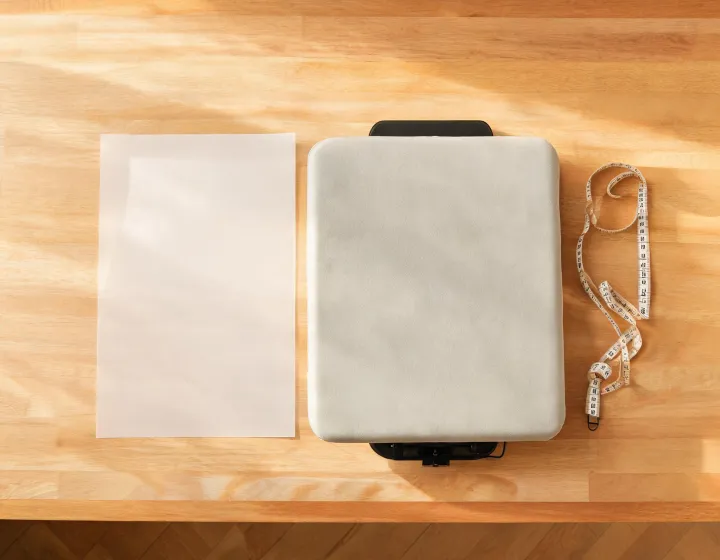
Site readiness map for a DTF install
Whether each item is required depends on the proposed model. Leave a cell blank when the datasheet has not been read yet. Do not copy a value from a different manufacturer page into the brief.
Power
Record volts, hertz, phase, and the breaker already on the wall. A 110 V convenience outlet and a 220 V machine are not interchangeable. Ask for the full-load current on the exact model, with the powder heater on if that heater shares the circuit.
Heat and extraction
Powder and a heat press add heat and fine particles. Note ambient temperature and whether the room already has extraction. Noise level, if the buyer has a limit, should be requested with the distance at which it was measured.
Network and files
State if the RIP must see the printer on a LAN, and which file types the art team will send. A control interface that needs a dedicated computer is an accessory line, not a footnote.
Footprint
Machine length and width are not the working envelope. Add service access in millimeters on the side where film or shirts are loaded. Include the press if it must sit in the same bay.
Handling
Door width, elevator, and floor rating decide whether the crate can reach the room. Write the US destination down to the dock or the suite. Inside delivery is a freight option, not a default.
Maintenance path
Who wipes the head, who stores ink, and what spare parts list should arrive with the machine. A preventive maintenance interval belongs to the supplier document for that model.
Standard width versus the graphic you actually sell
A standard A3 configuration can reduce the document set when every graphic fits inside 297 mm by 420 mm and the buyer accepts the stated resolution. An application-specific platen or a wider roll is the other side of that choice when shirt graphics, all-over prints, or gang sheets exceed that sheet. Neither side is a quality ranking. It is a fit question. Put the chosen side in the brief so a lower purchase price on a smaller width is not compared with a wider machine as if the scope matched.
The same split applies to lifecycle scope. A low equipment price is useful when film, powder, ink, press, freight, and commissioning are truly the same on every reply. If they are not, the delivered cost is the comparison, and the missing lines should stay visible. Headline dpi or shirts per hour should carry the test file, the media, and whether white ink was printing. That is the difference between a screening number and a number a production lead can plan around.