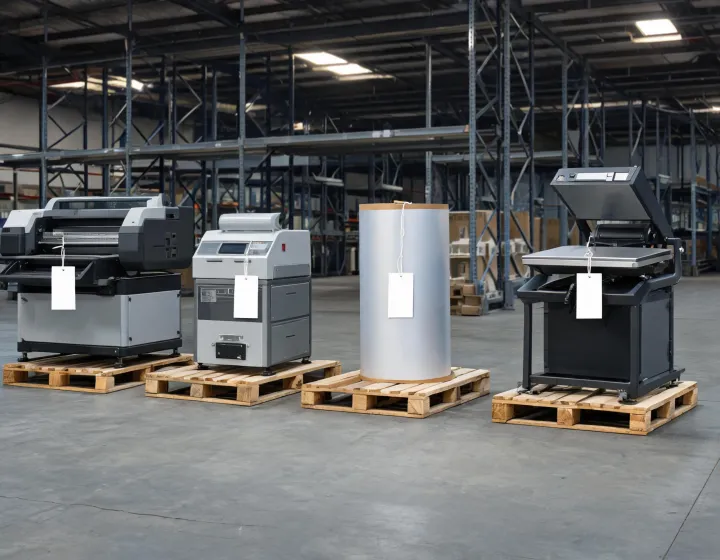
Cost layers inside a printer bundle
Use the layer names so a missing press cannot hide inside the word bundle. Amounts stay blank until a supplier writes them on the proposed configuration.
| Layer |
What to write |
Comparison rule |
| Printer |
Model, print width in mm or inches, resolution options in dpi, white-ink path |
One model per column. Alternates go to a deviation row. |
| Powder and cure |
Shaker or oven included or not, heater power in kW if stated, footprint |
Do not treat a printer-only price as equal to a printer-plus-shaker price. |
| Film, ink, spares |
Roll width, ink pack in ml, spare parts list, and whether the first kit ships |
Consumables are a delivered-cost layer even when the buyer already has a press. |
| RIP and files |
Seat count, file types, and the control interface |
Software that is extra must be visible before the totals are ranked. |
| Press and freight |
Platen size, temperature and dwell units, incoterm, crate, US destination |
Commissioning scope is named as remote, on site, or excluded. |
Trade-offs to decide before the inquiry
A standard bundle can be easier to document when the buyer accepts the supplier default platen, a stated film width, and a stated ink set. An application-specific bundle is the other path when the shirt size, the all-over graphic, or the existing press forces a different platen or a press kept out of the order. Write which path you want. A supplier should not guess.
Price versus lifecycle scope is the second decision. The lowest equipment line can be the right screen when every other layer matches. If one offer excludes powder, film, freight, or training, the totals are not comparable yet. Ask for those lines rather than filling them from another brand page. Public DTF product pages, including manufacturer pages used as format references, describe that manufacturer equipment. They do not set ink yield, warranty, or service for the model a different supplier will propose.
Headline resolution versus test basis is the third decision. A dpi number is useful for screening. For approval, ask which file, which media, and which white-ink setting produced it. A factory acceptance test, when it is part of the purchase, should cite that same setting. Bill of materials language helps: each serial or batch of ink and each film lot the supplier will ship should be identifiable on the documents you request, not assumed from the bundle name.