FREE sourcing support up to 3%

Eligibility applies to qualified business buyers and is confirmed after we review your product, quantity, destination, and sourcing requirements.

Specification console

dtf printer for small business

A small shop still needs a written configuration. Floor space, one operator, and a single shift do not remove the questions about film width, white ink, power, and what the quotation leaves out. This page is the preparation step before factories are asked to price the same small-business brief.

Print process
DTF film, white underbase on or off, and whether the press is a separate machine
Printable media
PET film grade, cotton or blend shirts, and any material the buyer will refuse
Working envelope
Printable width and length in mm or inches, distinct from the machine footprint
Utilities requirement
Volts, hertz, phase, and whether a dedicated circuit is already in the room
Open items
RIP seats, powder unit, spare parts list, and who runs the first sample
Next action
Request factory quotes after the fields below are either filled or marked unknown
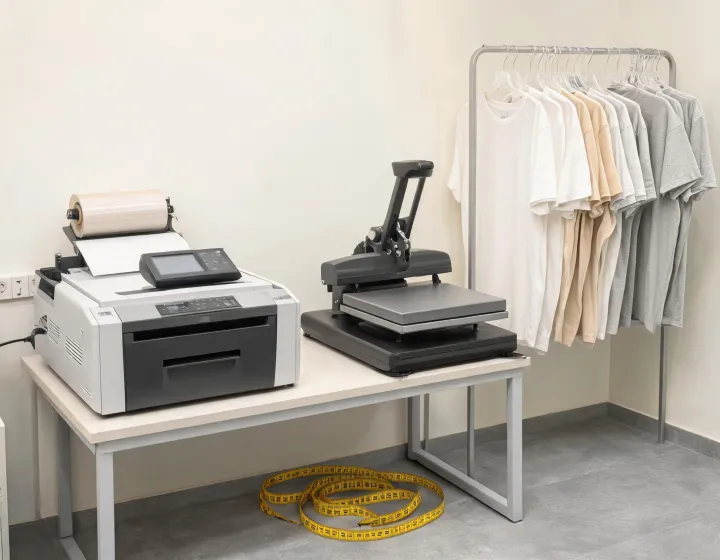
Compact DTF printer beside a heat press in a small print room

Four fields a small-business quotation has to answer

These cards are buyer questions. They are not a claim that this desk operates a print shop or that any factory has already been approved.

Application and process

Write the weekly shirt count, the largest graphic in millimeters, and whether jobs are mostly light garments or dark garments that need white ink. A shop that also sells film to other press users should say so, because roll handling differs from platen work.

Inputs and interfaces

Name the RIP or design files you already use, the control interface you expect, and the network drop if the printer is supposed to sit on the shop LAN. If artwork stays on a USB stick, write that. Do not let a supplier assume a cloud workflow.

Duty and throughput

State hours per day and a shirts-per-hour target only with the print area and resolution you mean. A figure taken from a brochure at a different resolution is a headline rating. Ask the supplier to restate throughput against your file, or to mark it as not tested.

Files and acceptance

List the datasheet revision, the electrical drawing, the ink safety sheet, and any wash test you will accept as evidence. A factory acceptance test, if offered, should name the media and the graphic. Certificates stay with the proposed model. They are not credentials of this desk.

A 120 V, 60 Hz, single-phase outlet is common in a small US shop, and it is still a question. Write the breaker amperage you actually have. If the powder heater is on a second plug, note its rated power in kW. Room temperature near 20 °C to 25 °C and humidity in percent RH are site facts, not printer achievements.

How to submit the small-business request

What belongs in the first message?

Product family, application, print area with units, quantity of printers, US destination, and the week or month you hope to receive them. Add optional budget with currency and say whether that figure is per unit or the whole order. A finished supplier price is not required to start.

How should supplier preference be read?

Premium, mid-range, budget-friendly, or not yet decided is your instruction for how options should be presented. It is not a grade this desk has audited. You can change it when the first replies show different accessory lists.

What will not be promised on this page?

No reply-time clock, no stock list, and no statement that a machine will fit the room. Power, extraction, and floor loading are confirmed from the proposed model documents and your site notes. Start from the inquiry names if you only have a category label so far.

Where do drawings go?

The form has no upload field. Describe the drawing title and revision in the requirement, then send the file when the desk replies. The specification guide shows how to split a bundle so a press is not silently included.

Should a small shop specify the narrow standard or a wider setup?

One argument keeps a 300 mm printable width and a single platen when every graphic fits, because the document set stays short. The opposing argument asks for 450 mm or 600 mm, or for a press the shop already owns, when the art does not fit. Write the graphic size in millimeters. A smaller machine price on the narrow width is a different offer from the wider working envelope.

Delivered cost is the other split. When both replies include ink volume in milliliters, film, freight under one incoterm, and commissioning scope, the equipment lines can be ranked. If a reply drops the spare parts list or the RIP seat, leave the cell blank. Duty in hours per day is a shop fact. Throughput in shirts per hour stays tied to dpi and print area. Noise level in dB only counts when the measurement distance is written next to it.

Minimum inputs before factories are compared

  1. Printer quantity and whether a heat press is in the same order
  2. Printable width and the shirt or film size you actually run
  3. Voltage, frequency, and phase
  4. US destination and requested timing
  5. Documents you can name today, and the ones still missing

Read the procurement brief if you want the longer evidence list before you type.

Submit procurement requirements